SHOTENKENCHIKU /February
2026/01/29 2026
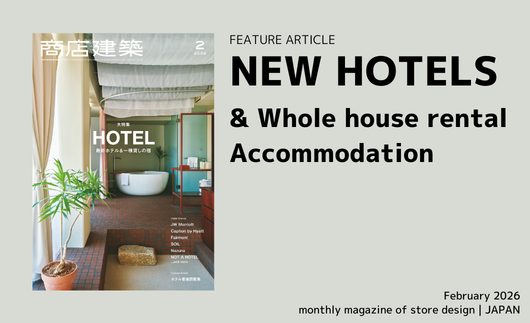
SHOTENKENCHIKU is monthly magazine of Japanese interior design / store design / commercial architecture
February 2026, SUMMARY
FEATURE ARTICLE
NEW HOTELS
& Whole house rental Accommodation
------------------------------------------------------------------------------------------------------------
FEATURE ARTICLE
NEW HOTELS & Whole house rental Accommodation
JW Marriott Hotel Tokyo
(Page 38)
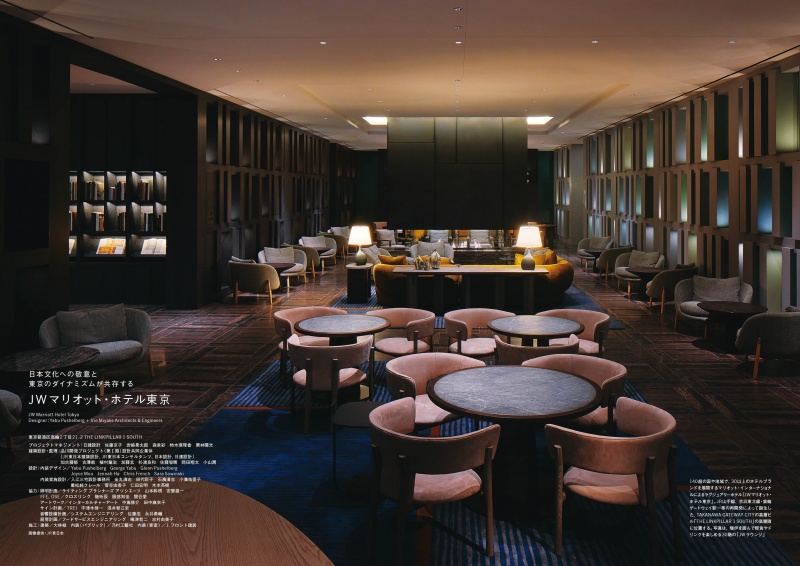
A luxury hotel planned for the upper floors of “TAKANAWA
GATEWAY CITY”. Designed as a boundary between the urban
environment and pastoral landscapes, it draws upon Japanese
concepts such as simplicity, asymmetry, and spatial void. To
achieve this, sculptural forms and restrained expression, along
with contrasting elements like artificial materials and nature, are
employed simultaneously. Everything from the furniture and
products to the very spaces themselves is carefully arranged to
create harmony. This hotel embodies the coexistence of Japan's
cultural depth and the dynamism of modern Tokyo.
Designer : Yabu Pushelberg + Irie Miyake Architects & Engineers
FEATURE ARTICLE
NEW HOTELS & Whole house rental Accommodation
Caption by Hyatt Kabutocho Tokyo
(Page 60)
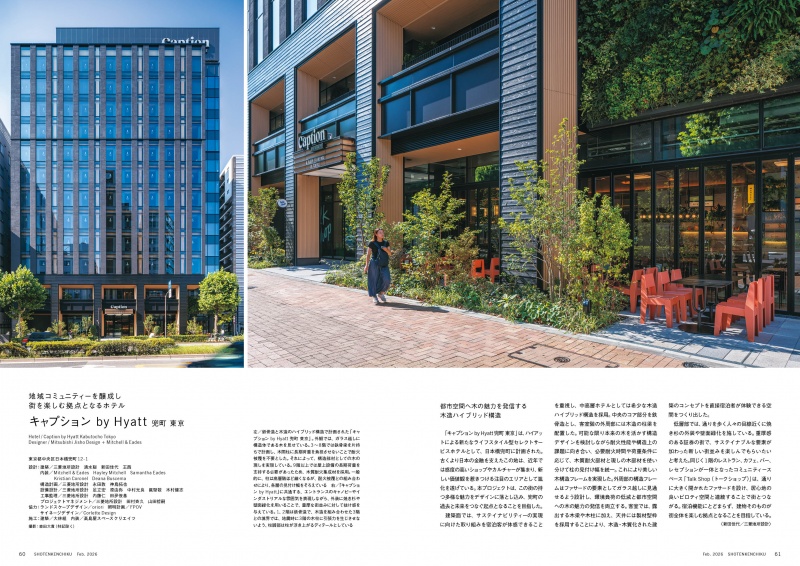
A lifestyle hotel by Hyatt, the globally expanding hotel brand.
Located in Tokyo’s Kabutocho district, which has long supported
Japan’s economy as a financial hub, this area is now undergoing
redevelopment to become a destination for discerning visitors.
The hotel was designed to serve as a point of convergence
between past and future, and as a community hub within the city.
From a sustainability perspective, wood construction was
incorporated into parts of the building, positioning it as a prototype
for mid-rise wooden buildings. It aims to be a space utilized by
nearby office workers and residents through its meeting rooms
and dining establishments.
Designer : Mitsubishi Jisho Design + Mitchell & Eades
FEATURE ARTICLE
NEW HOTELS & Whole house rental Accommodation
Fairmont Tokyo
(Page 72)
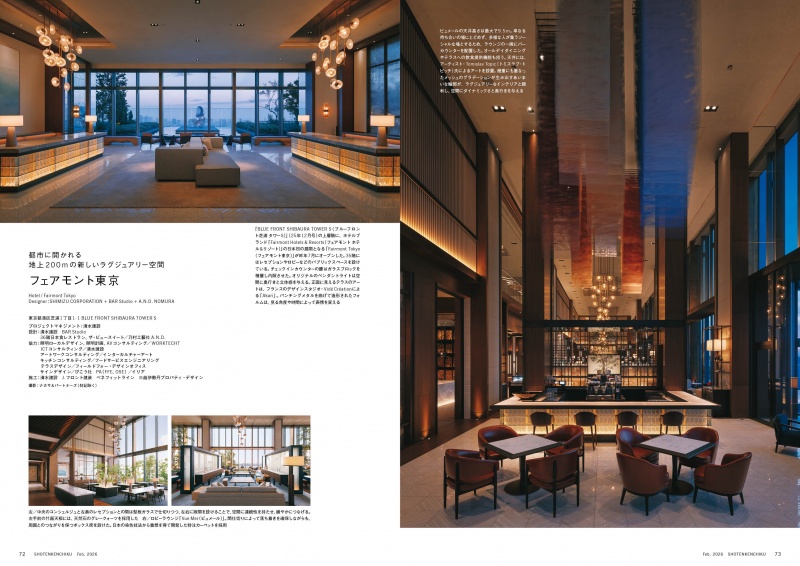
Fairmont Tokyo occupies the upper floors of “BLUE FRONT
SHIBAURA TOWER S”. The 35th-floor Sky Lobby is an open
space where indoor and outdoor boundaries blend seamlessly,
featuring diverse relaxation areas including a lush terrace, infinity
pool, and wellness space. All 217 guest rooms offer panoramic
views of Tokyo Bay, Rainbow Bridge, and the cityscape, delivering
a premium lodging experience. Artworks by domestic and
international artists are displayed throughout. This inclusive luxury
hotel also boasts comprehensive facilities including restaurants, a
lounge for Gold members, and a spa.
Designer : SHIMIZU CORPORATION + BAR Studio + A.N.D.
NOMURA
FEATURE ARTICLE
NEW HOTELS & Whole house rental Accommodation
SOIL Nagatoyumoto
(Page 89)
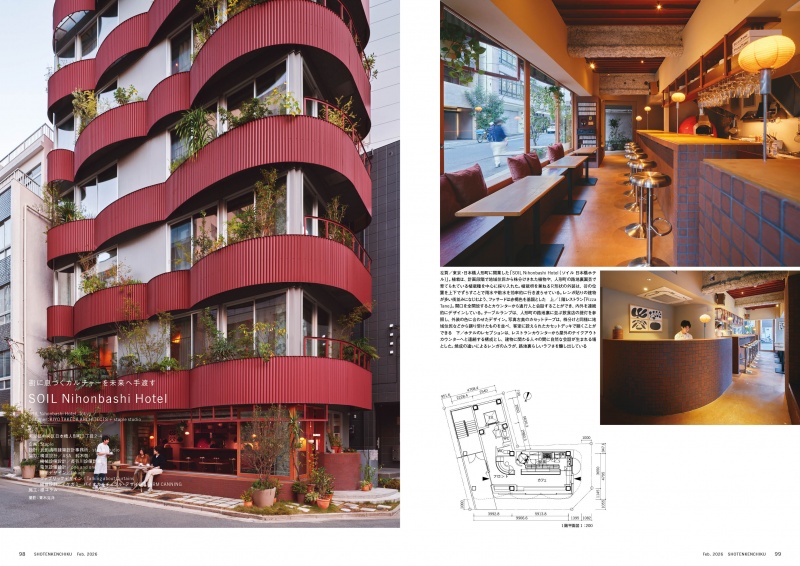
“SOIL Nagatoyumoto” is a revitalized former inn in the hot spring
town of Nagato City, Yamaguchi Prefecture, now open to the
community as a place to connect with the local area. The first floor
features an open design where anyone can naturally enter and
spend time as they wish. The guest rooms preserve the inn's
heritage while embracing Nagato Yumoto’s natural surroundings.
Earth tones dominate the palette, complemented by emerald
green curtains evoking rivers and trees, and leaf-inspired lighting
that creates a soft ambiance. Furthermore, by incorporating locally
sourced materials and lighting crafted by local artisans, along with
artworks, the space expresses the town's charm and connections
throughout its entire design.
Designer : Puddle
FEATURE ARTICLE
NEW HOTELS & Whole house rental Accommodation
bon-yado U
(Page 127)
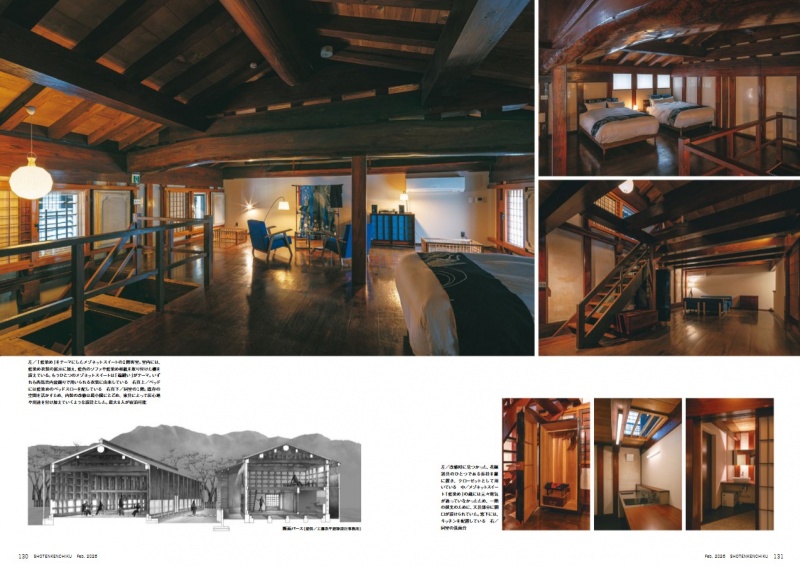
Bon-yado U is a complex facility located in Ugo Town, Akita
Prefecture. This 180-year-old structure, comprising five buildings,
features three storehouses known as “uchigura”—a construction
particular to heavy snow regions. These have been renovated into
two hotel buildings and one sauna. The remaining two buildings
house a cafe and community space. The powerful structural
framework of the storehouses leaves a strong impression on
visitors. Planned as a “cultural exchange facility where you can
stay,” this place has become a gathering spot for everyone from
tourists to locals.
Designer : Kohei Kudo & Associates
FEATURE ARTICLE
NEW HOTELS & Whole house rental Accommodation
TACTILE HOUSE OSAKA
(Page 140)
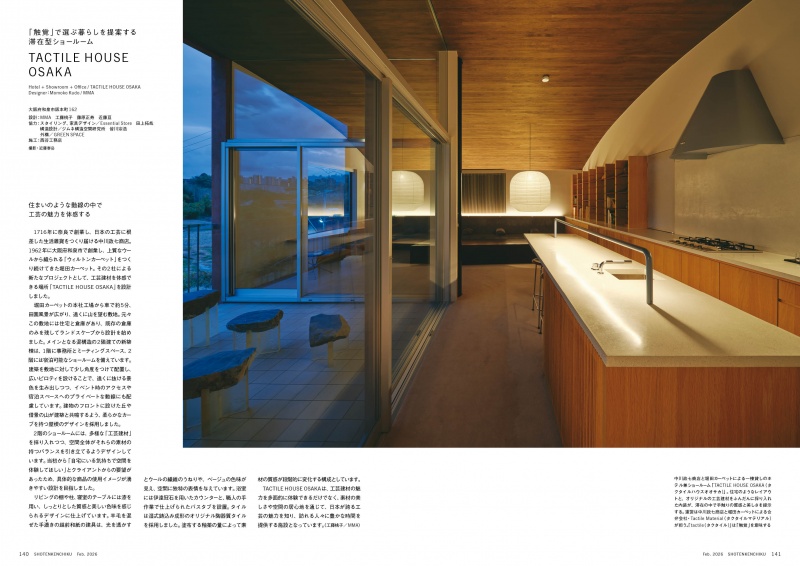
Hotta Carpet, a wool carpet manufacturer based in Izumi City,
Osaka Prefecture, has launched a new project: the showroom and
single-building rental hotel “TACTILE HOUSE OSAKA.” The
residential-style layout features abundant use of building materials
crafted using craftsmanship techniques. The vaulted ceiling
throughout the building softly diffuses light across the entire
space. Operations are managed by “Tactile Material,” a joint
venture between Hotta Carpet and Nakagawa Masashichi Shoten.
Guests can experience enriching moments within a sophisticated
space created by original wool carpets and artisanal building
materials.
Designer : MMA
FEATURE ARTICLE
NEW HOTELS & Whole house rental Accommodation
THE SIRIUS
(Page 155)
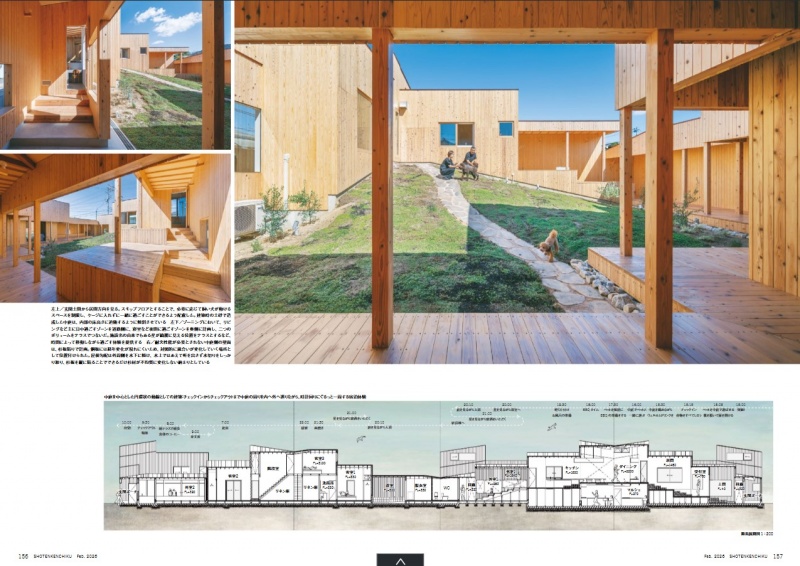
A dog-friendly, entire-house rental accommodation. Its L-shaped
floor plan centers around a dog run, comprising a main volume
focused on daytime living in the living area, a separate volume for
nighttime use including bedrooms, and a connecting deck. The
interior features a split-level design, thoughtfully allowing dogs to
stay together without caging while enabling restrictions on their
movement space as needed. The building's volumes and window
placements were determined considering views to the surrounding
landscape and how the structure appears from neighboring areas.
This harmonizes with the scenery while establishing a sense of
enclosed security.
Designer : Hiroto Kawaguchi / 1110 Office for Architecture
FEATURE ARTICLE
NEW HOTELS & Whole house rental Accommodation
THE COVE -GAMAGORI CLASSIC HOTEL-
(Page 160)
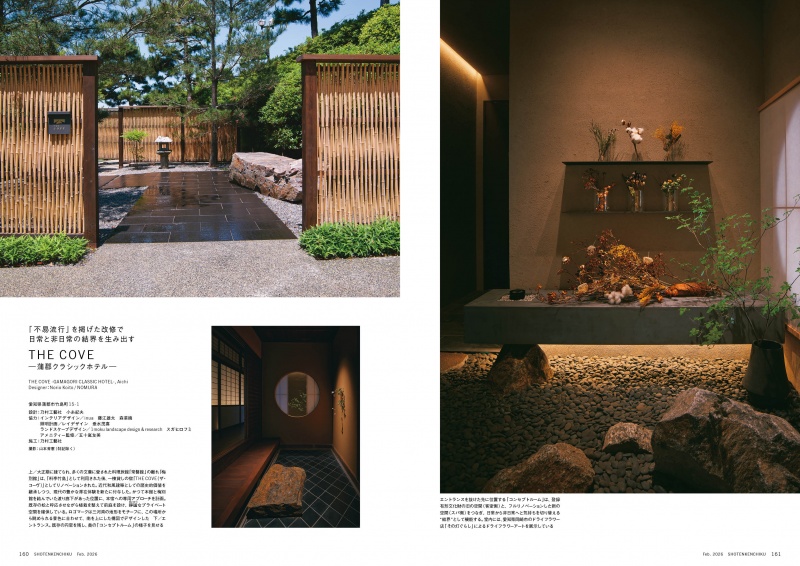
Originally built as a detached annex to the Tokiwa-kan Ryori
Ryokan—a traditional culinary inn long associated with renowned
Japanese writers since the late Meiji period—the Ume Bekkan has
been renovated and reopened as THE COVE, a whole-house
rental retreat. Centered on the concept of “Fueki-ryu-ko” (timeless
yet evolving), its design core embraces a subtle sense of tension
created through the dialogue between old and new. A private front
garden was created before the entrance, featuring multiple
boundary markers designed as experiential devices guiding
guests from the everyday to the extraordinary. Views of Mikawa
Bay, including Takeshima Island, are ensured from every space.
Carefully selected amenities and meticulous total production
down to the smallest details deliver a high-value lodging experience
that fully leverages the charm of this cultural heritage building.
Designer : NOMURA
SUBSCRIBE
Print Issue : For overseas subscription and order, please contact to the following
Digital Issue : zinio.com
BACK NUMBER
このエントリーのURL
URL